What is the difference between adaptive and average pooling? I couldn’t find this in Chapter 14.
Is there a full implementation of ResNet as described in Chapter 14 available? I looked in the GitHub repo but couldn’t find one.
Hi all.
I was playing with the convolutional neural network with different kernels on MNIST digit data. I changed kernels for Conv2d layers to detect the top and right edges. Then, I combined the outputs of those two kernels for a new output. I wrote a blog on it if anybody wants to take a look and try it out.
Have fun.
1 Like
Principle Component Analysis is topic in linear algebra. Basically, you are attempting to create an alternative basis to capture the maximum amount of variability with a minimum of dimensions (fewest basis vectors). For example, the vector from (0,0,0) to (1, 2,3) is a straight line being represented in three dimensional space. If you orient the frame to have the first basis on the (1,2,3) vector, you could capture the variability with one dimension rather than three, requiring only one value to describe the vector.
The main point is dimension reduction, which is why PCA was used to transform the movie latent variables from five dimensions to two for plotting.
Hi everyone,
I’m looking to understand from this lesson how to determine why my bestseller model classifies certain images as bestsellers. Specifically, I want to uncover the defining characteristics of bestselling product images.
I.e. how do you apply Jeremy’s explanation of the fundamental building blocks of CNNs to understanding what is going on in all the layers of the neural net for computer vision? How do I produce images such as:
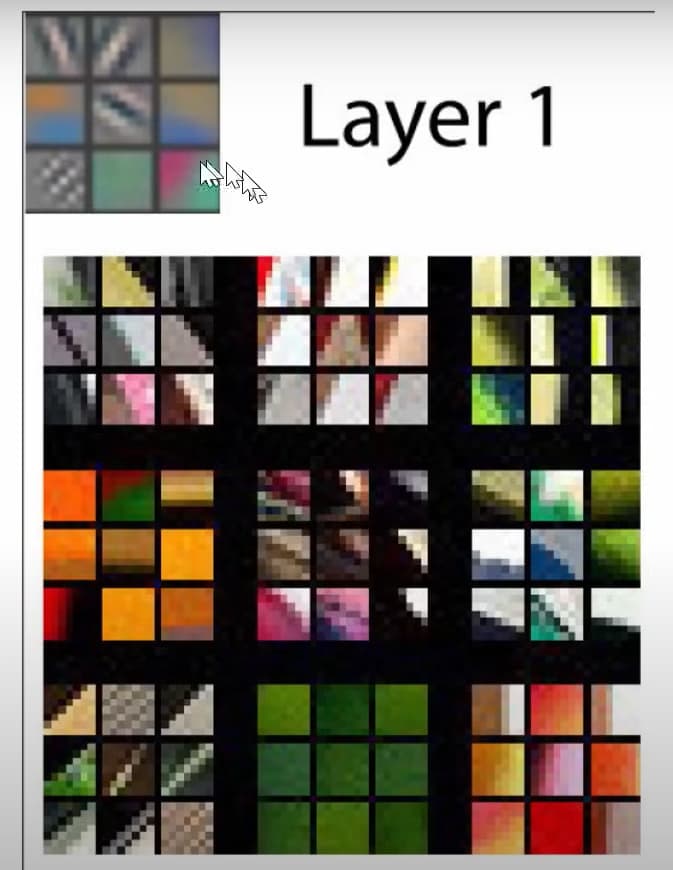
If anyone could provide further guidance on how to analyze and interpret my model’s classifications, I’d greatly appreciate it.
Please see my code in the kaggle link below:
Unfortunately I was not able to share the data I used to train this model as it belongs to a company.
Thank you!
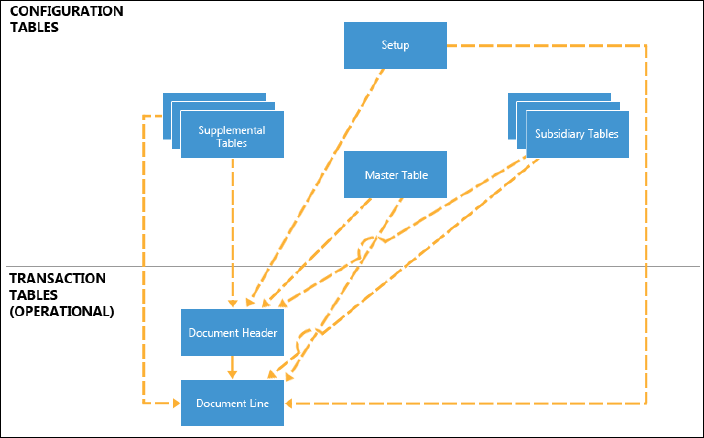
Document creation data flow
Documents are complex data structures that combine data from various types of tables. When users enter information into documents, most configuration tables for the application area are checked.
The following figure shows the data flow during document creation.
Journal creation data flow
People enter information into a journal line table when they are using a journal. Though users enter most information directly, many fields are assigned automatically. In all journals, many fields, such as Document No. or Reason Code, are assigned from or based on the corresponding journal batch table. The journal batch table contains a series of other default values for the journal lines.
For example, for the General Journal Line table, the Bal. Account Type and Bal. Account No. fields are assigned from the Gen. Journal Batch table.
In addition to defaults from the journal, and similar to the documents, many fields are assigned from the master, supplemental, and subsidiary tables that are associated with the journal transaction.