Jeremy will talk more about time series in 2nd half of tonight’s lesson.
Great, thank you.
Can we use this for Association Analysis and Market Basket Analysis ??
2 Likes
What does Jeremy mean when he says “users BY something” ? I guess this is a Python question
Where can I find the part of code (in the fast ai library) for the objective function being optimized for each kind of learner? For example, the Collab Learner or the one we used for Camvid Segmentation in lesson 3
Are mini batches necessary? I rented a p3.2xlarge once on AWS and i upped the batch size that was large enough for the whole dataset. Is that ok to do, or would I need minibatchs to happen because…?
1 Like
Batch size is the size of your mini batches 
Mini is by comparison to the whole dataset.
1 Like
what does * do in 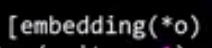 ?
?
1 Like
That’s pythonic: it’s transforming the list/tuple in arguments separated by a comma.
8 Likes
he’s talking about matrix dimension n_users x n_items
1 Like
you can look up *args to find out more about how this works in Python (and similarly **kwargs)
3 Likes
How likely is there to be a generalized model for tabular data?
3 Likes
Is this what you wanted? https://pytorch.org/docs/stable/optim.html?highlight=optim#module-torch.optim
Oh ok, so is it bad to set my batch size, essentially the minibatch size to the whole dataset?
If it fits in memory, there’s nothing wrong with this. But it’s unlikely to be the case in the real world
1 Like
That defeats the purpose of batch yes. It will likely don’t fit in memory moreover
Is that really true ? Isn’t the batch size also important for a good SGD convergence ?
1 Like
You can think of the matrix factorization that we explored in class today as a generalized model for tabular data: the only hyperparameters you need to choose are the number of desired factors for the user database and the number of desired factors for the movie database.
1 Like
When he sad ‘by’ he was referring to the comma in the code ‘(users, 1)’. In this case it was pointing to the bias number in the weights.